1865 Newfoundland One Cent
Victoria · 12 varieties · study revised Apr. 13th 2021
- Mintage
- 240,000
- Struck at
- Royal Mint, London (no mint mark)
- Composition
- Bronze
The first decimal coinage for Newfoundland appeared bearing the date 1865, which introduced the 1, 5, 10 and 20 Cent silver coins, along with the $2 gold issues. A few years later, in 1870, the 50 Cent coins were then introduced, and continued right up until 1919 when the last coins of this series were struck. (There was a small number of 1864 Large Cents which were struck, but they were not used for general circulation. They are quite rare!)
Read Barry's full introduction
Now with regards to the 1865 Large Cents, several varieties have been found in these coins, and others will likely appear in the near future. As it now stands, this Large Cent series has at least eleven listed variations, and judging by the number of variances that are now known to exist in the 1859 Canadian Large Cents, it is most probable that these numbers will continue to grow as well.
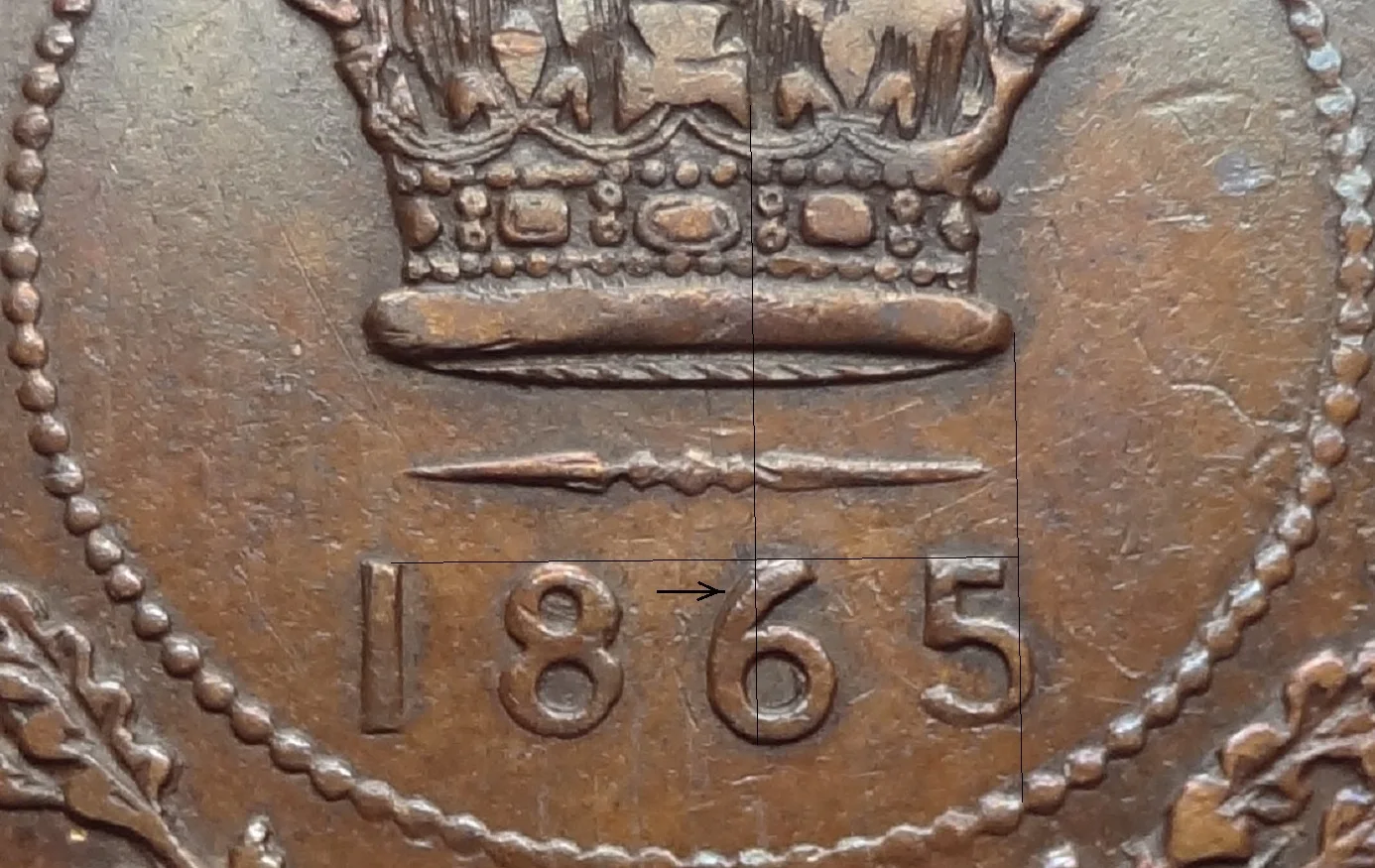
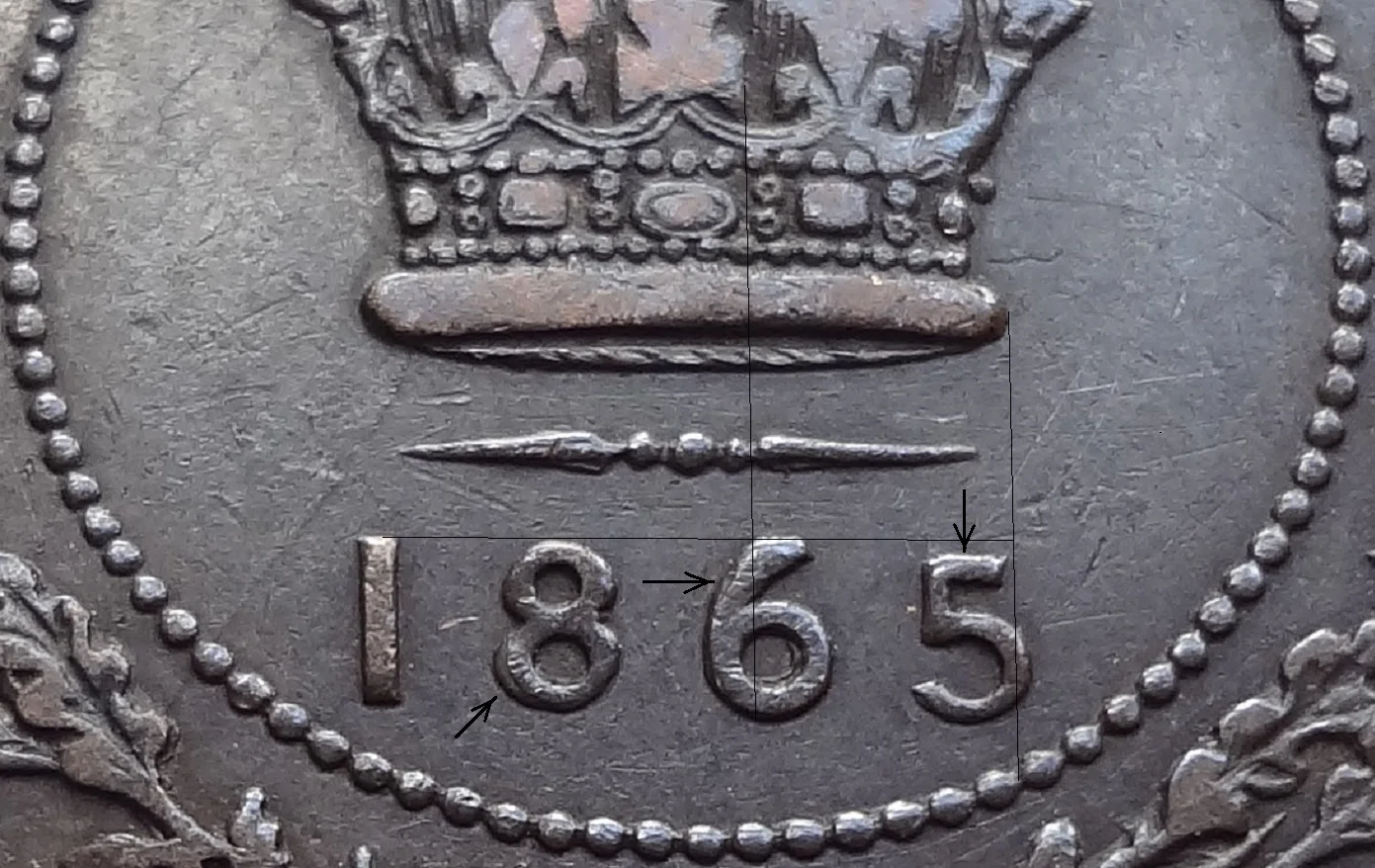
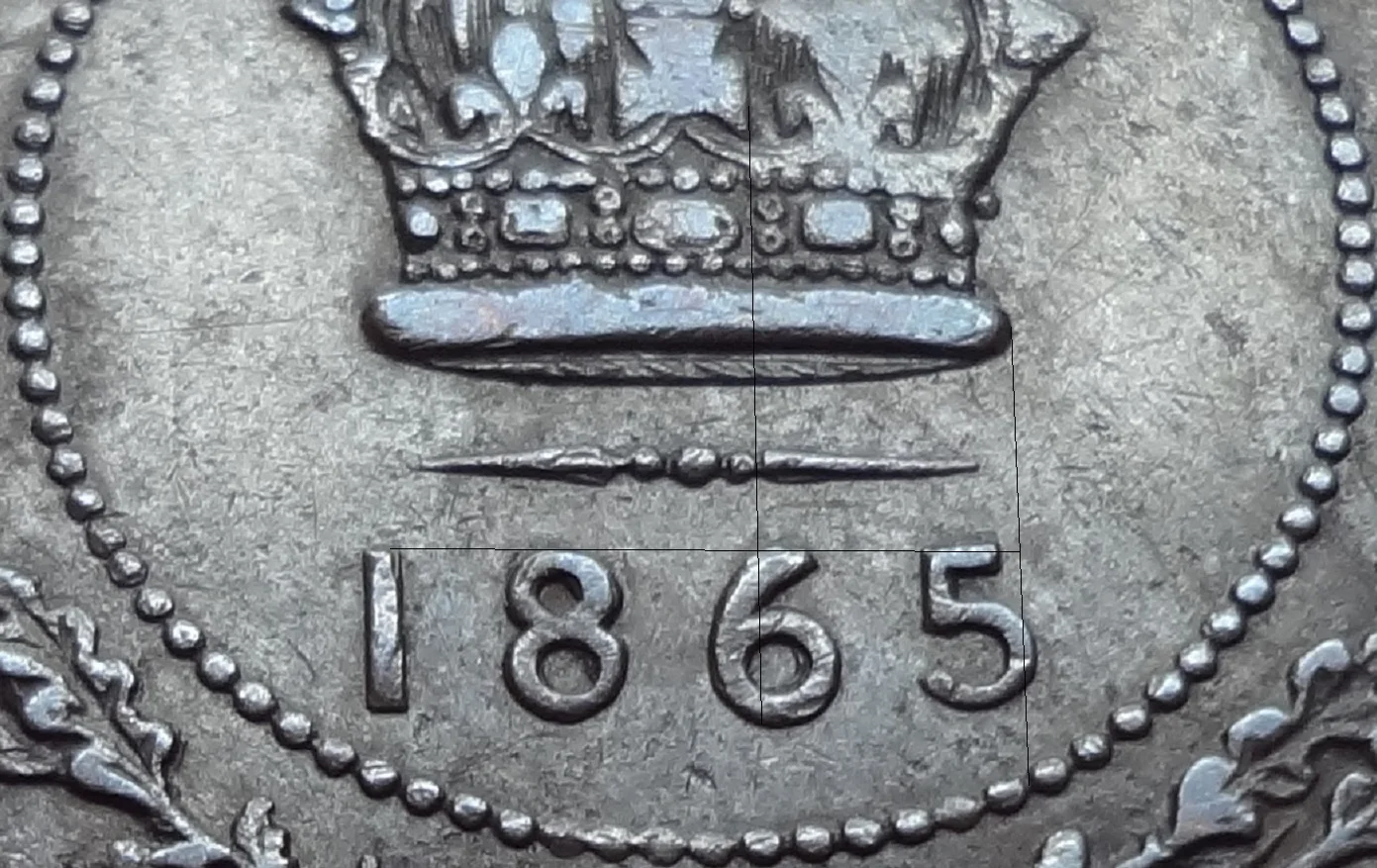
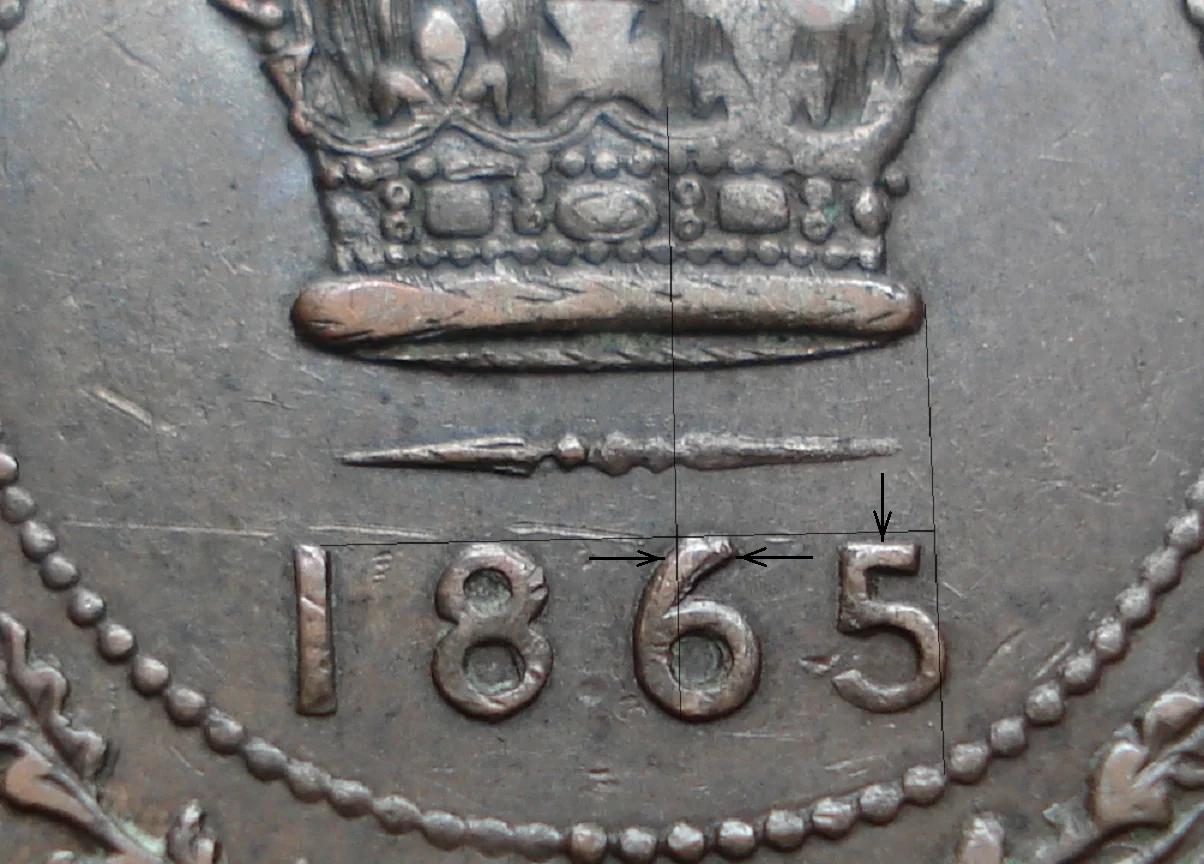
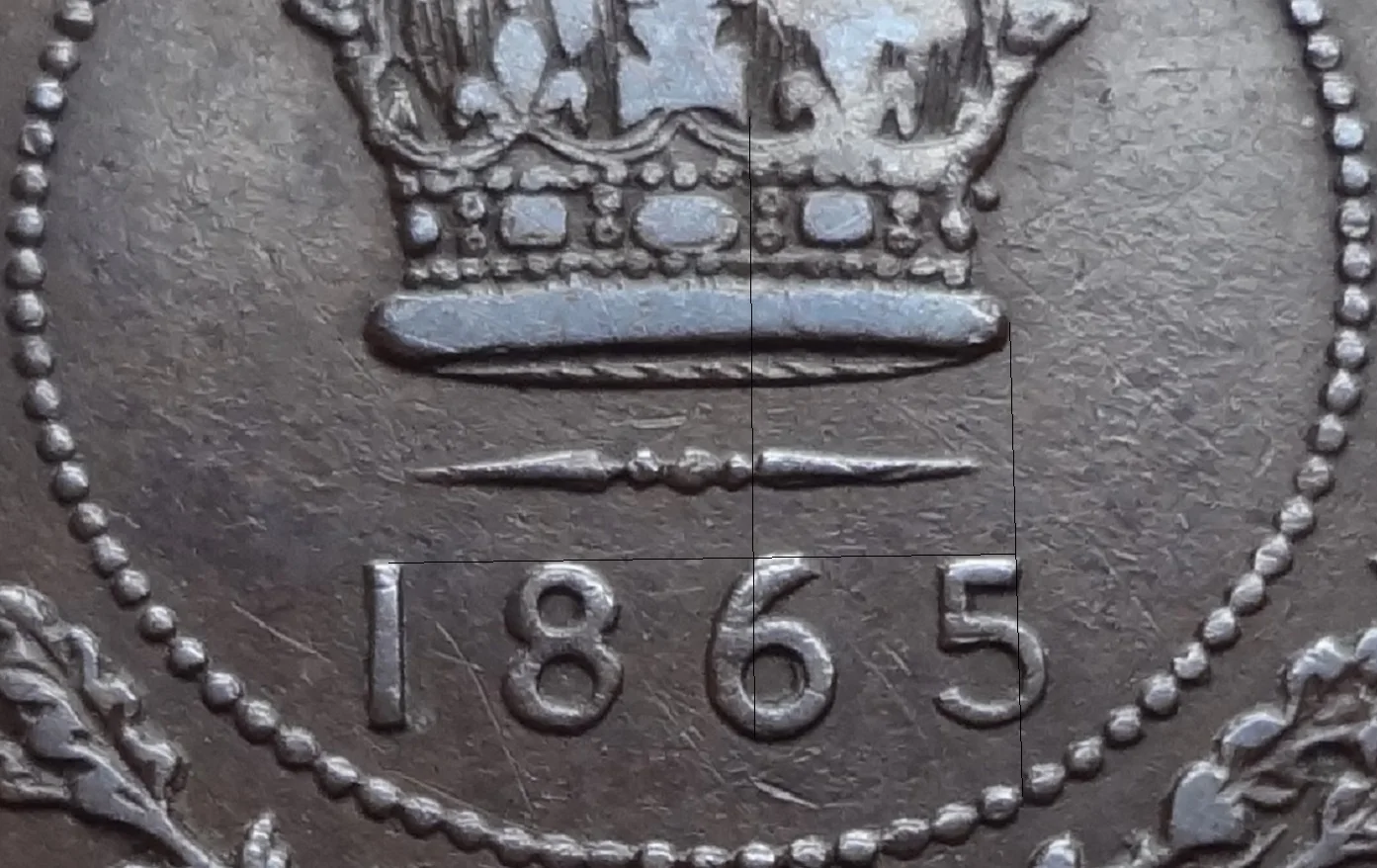
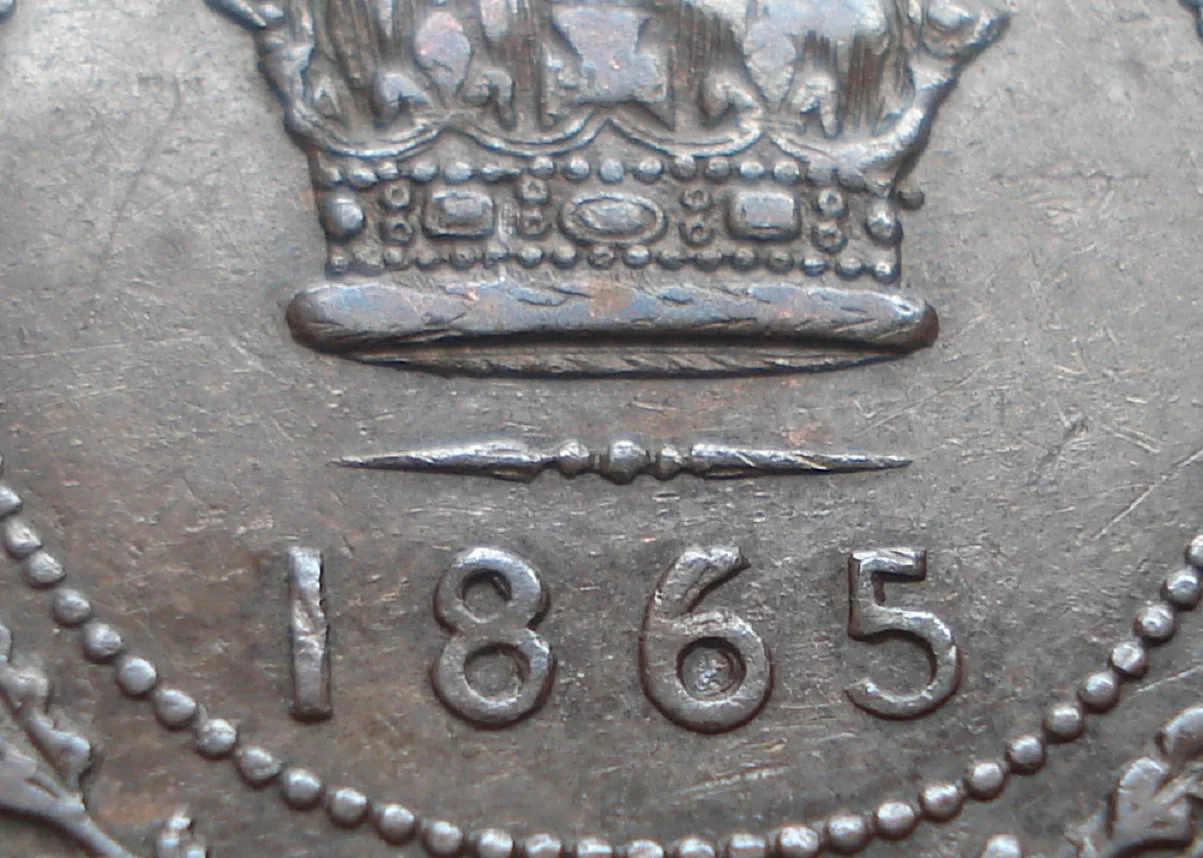
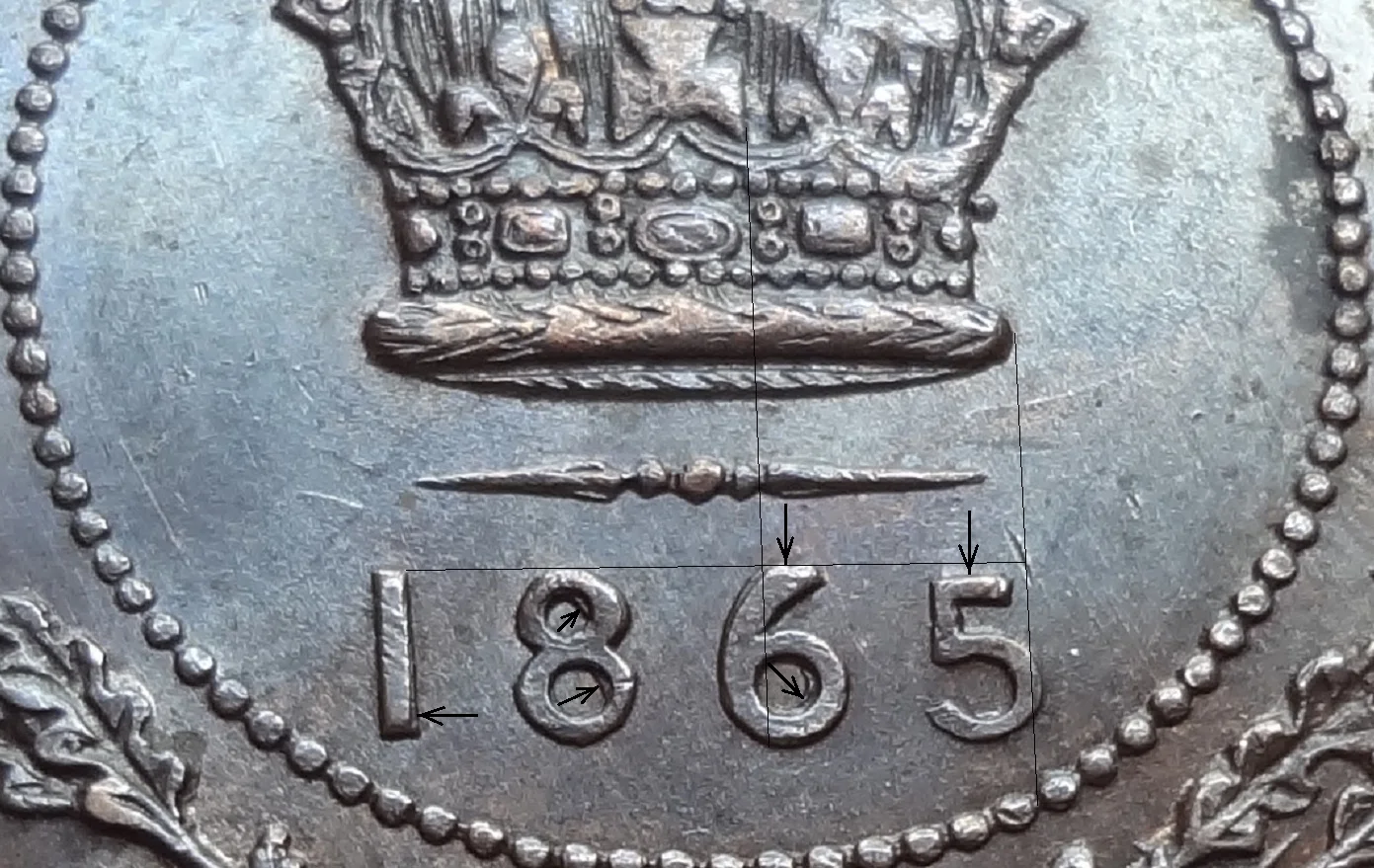
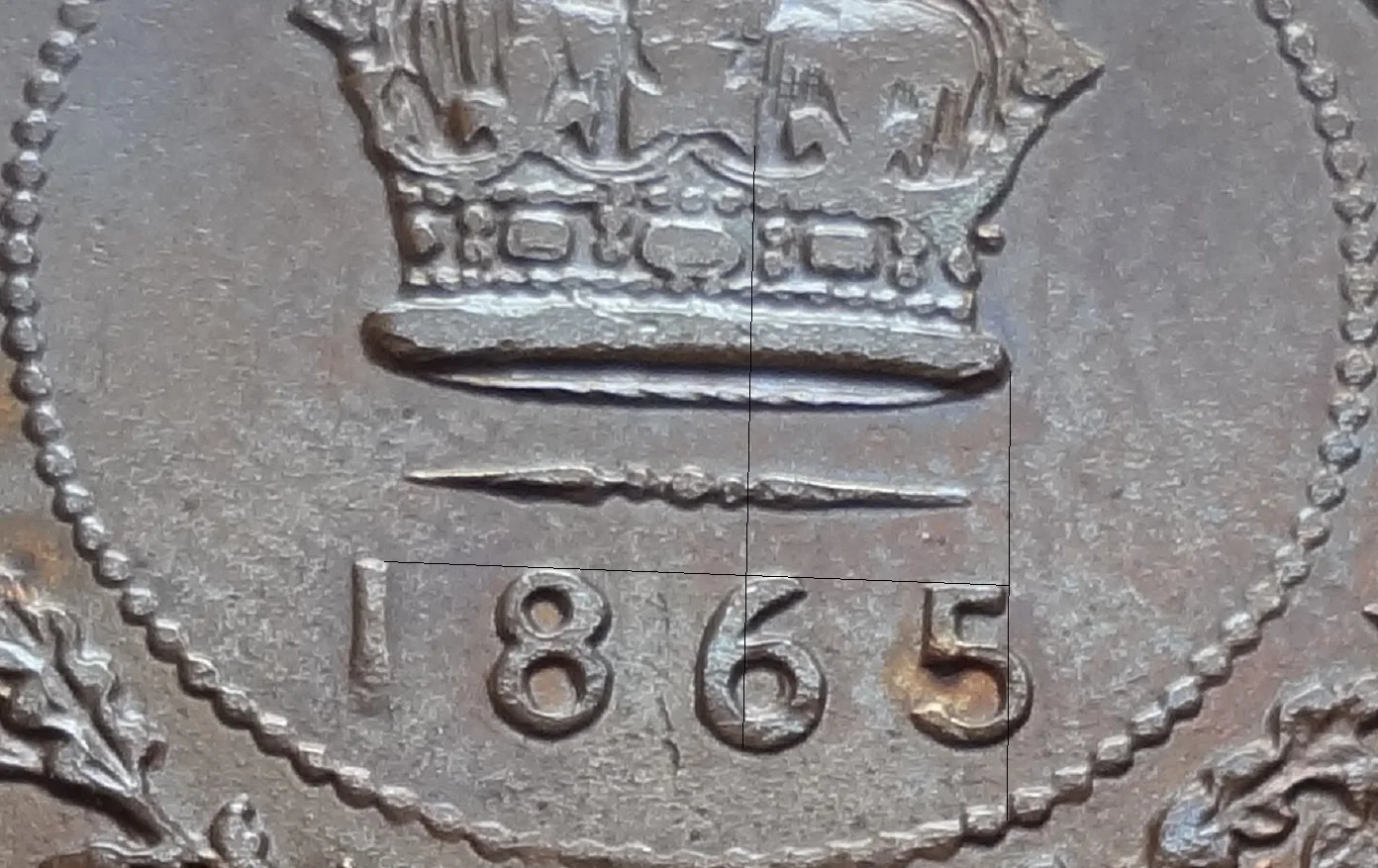
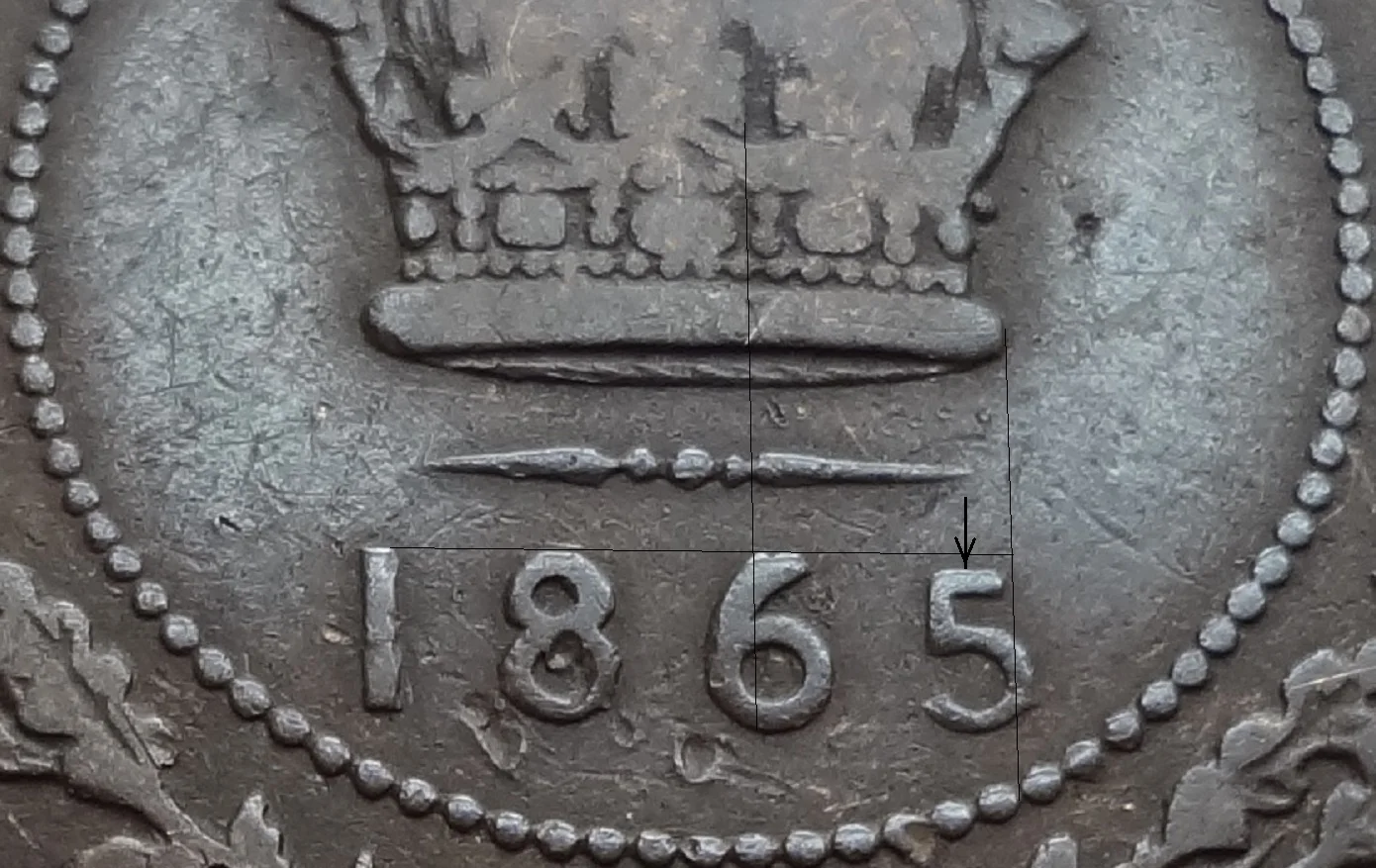
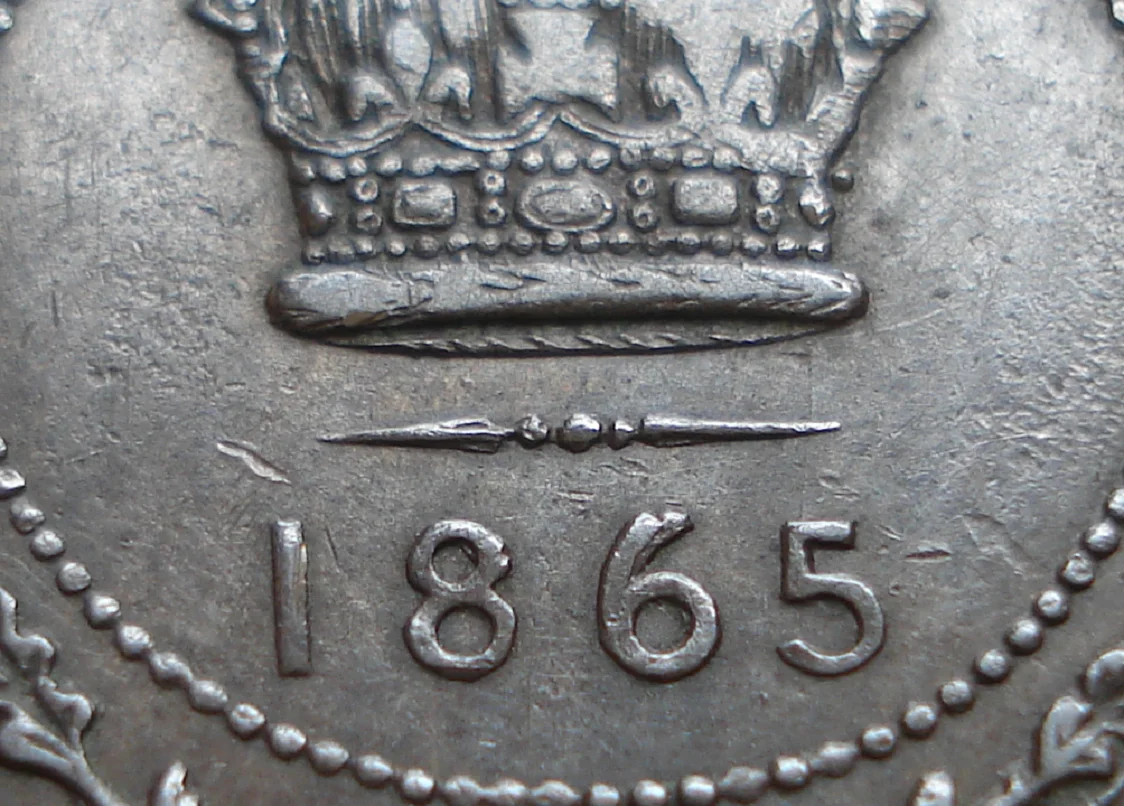
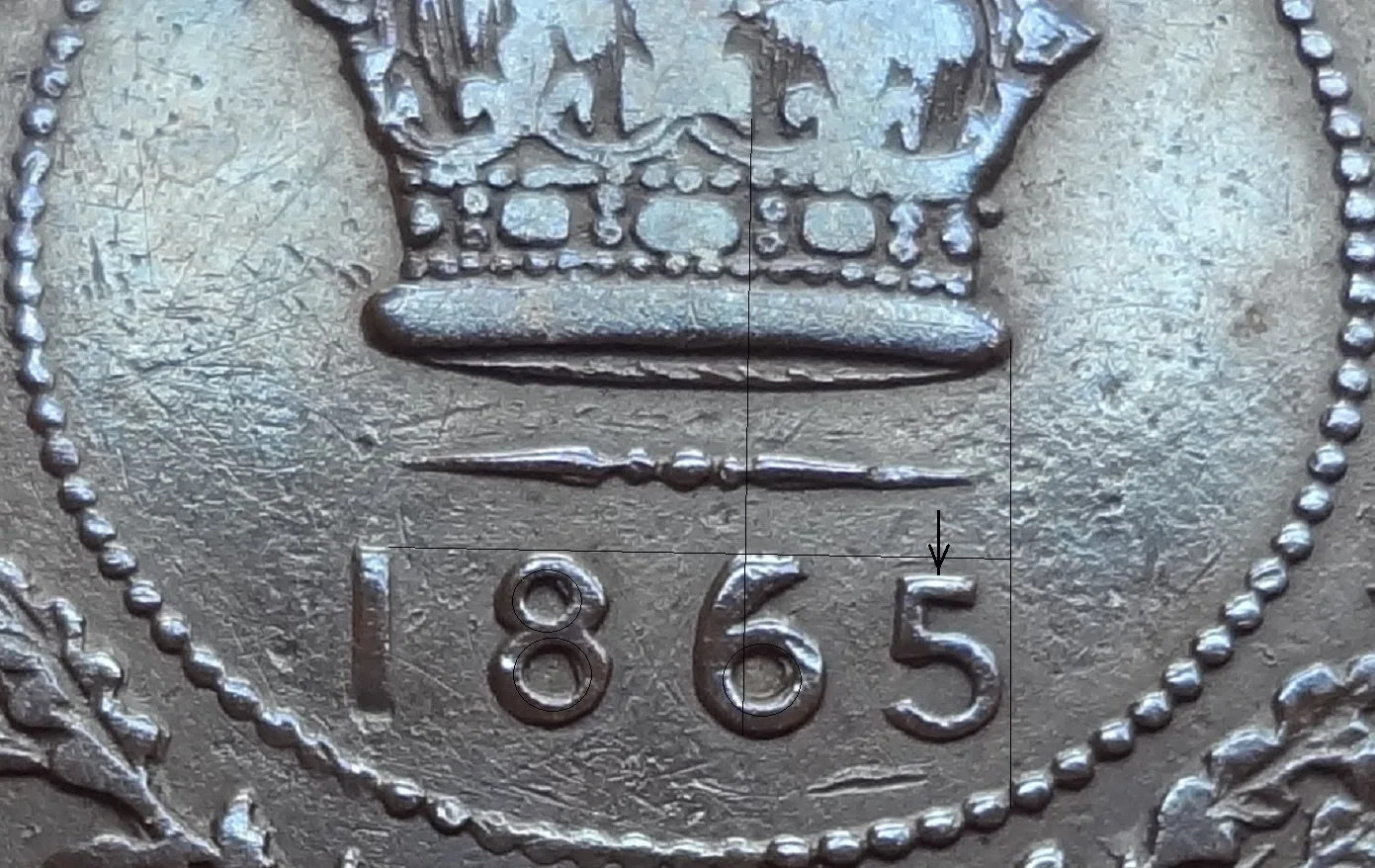
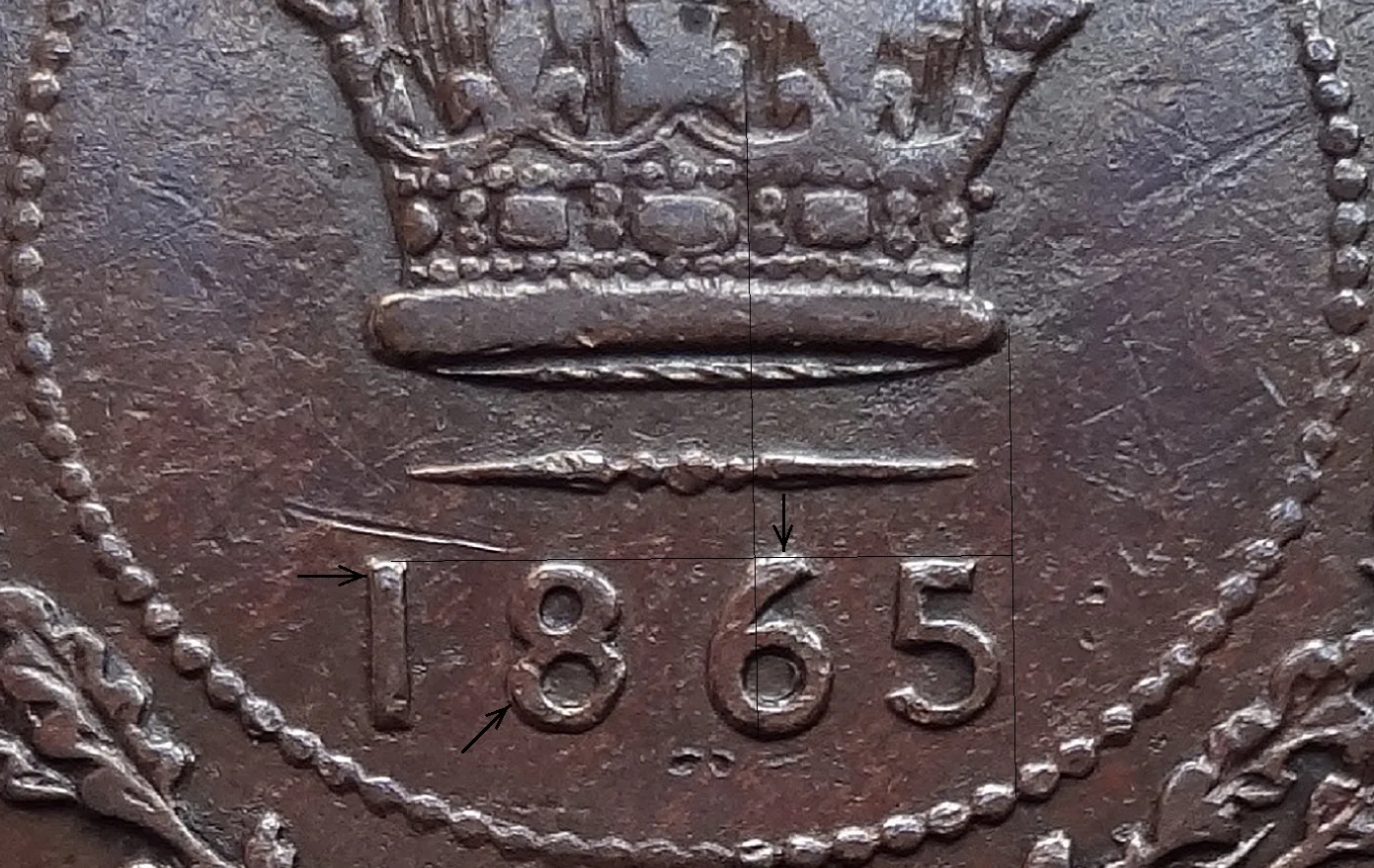
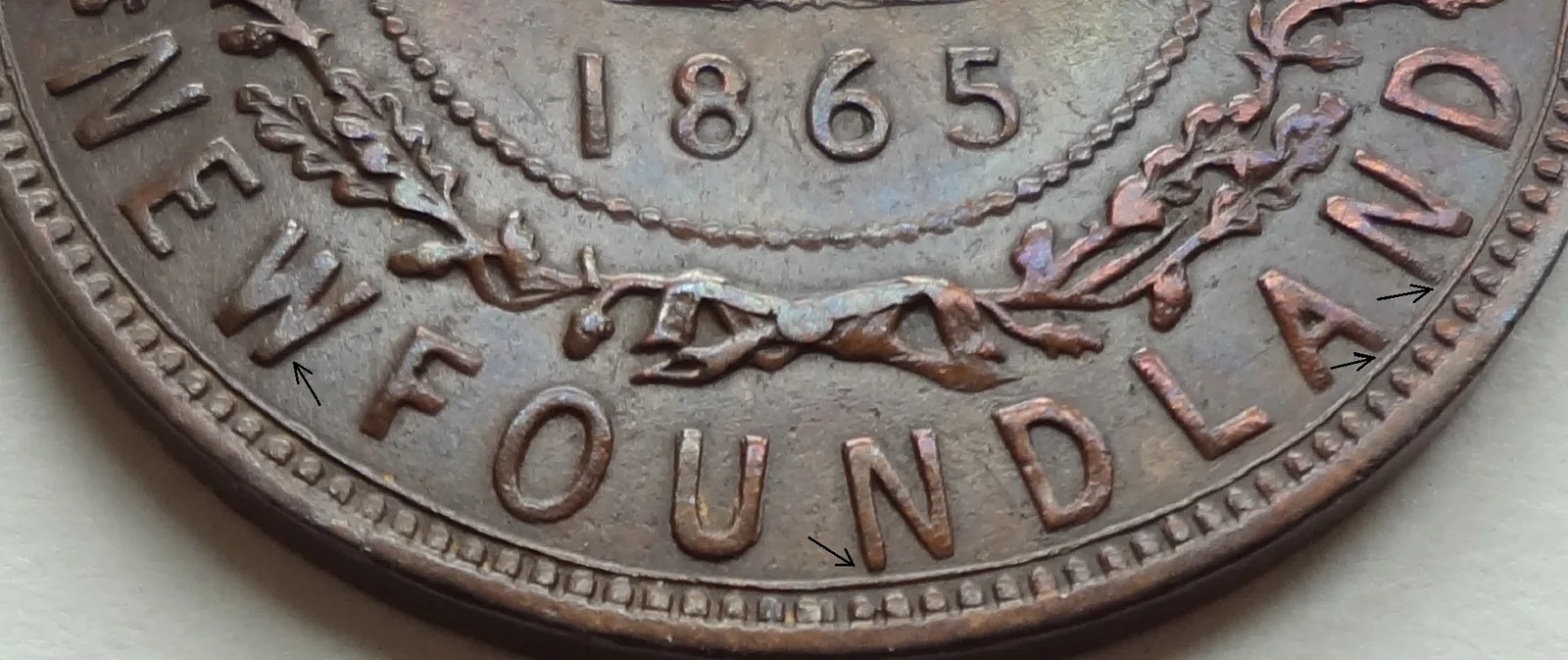
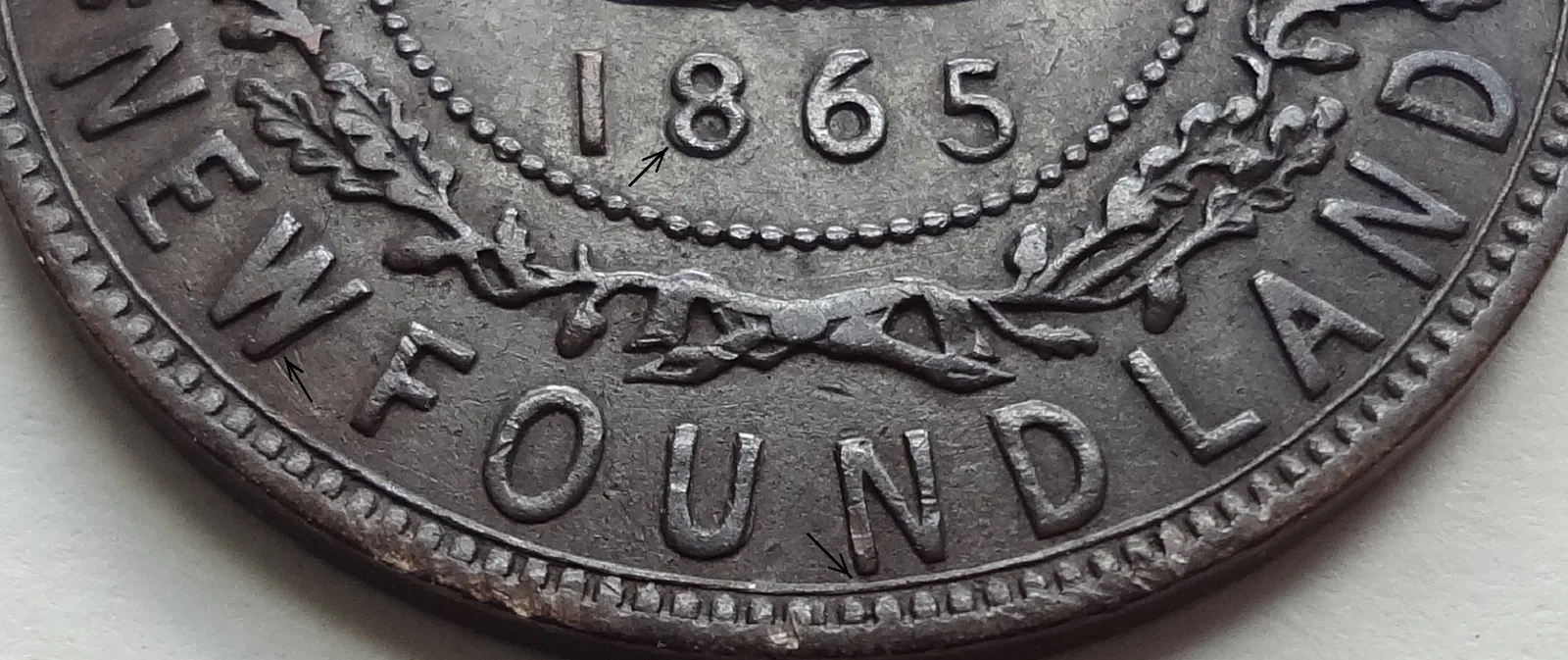
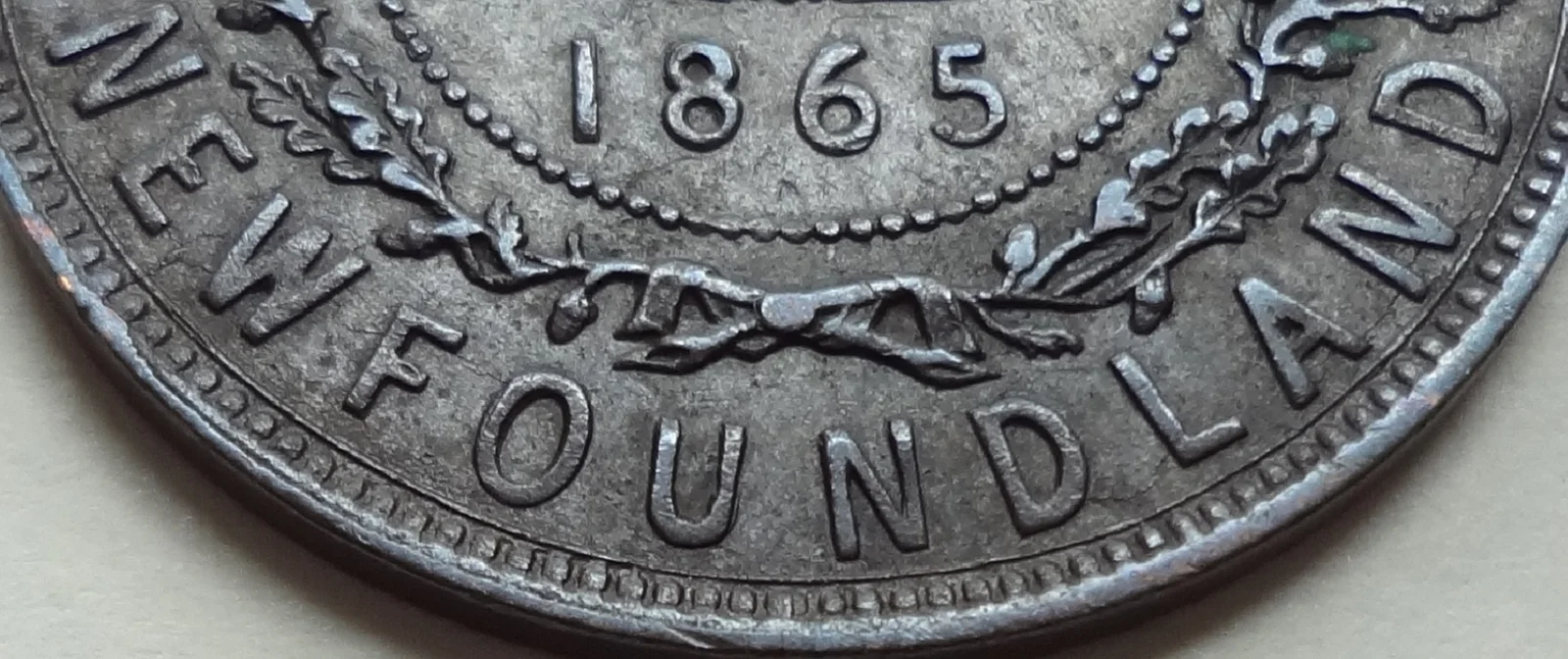
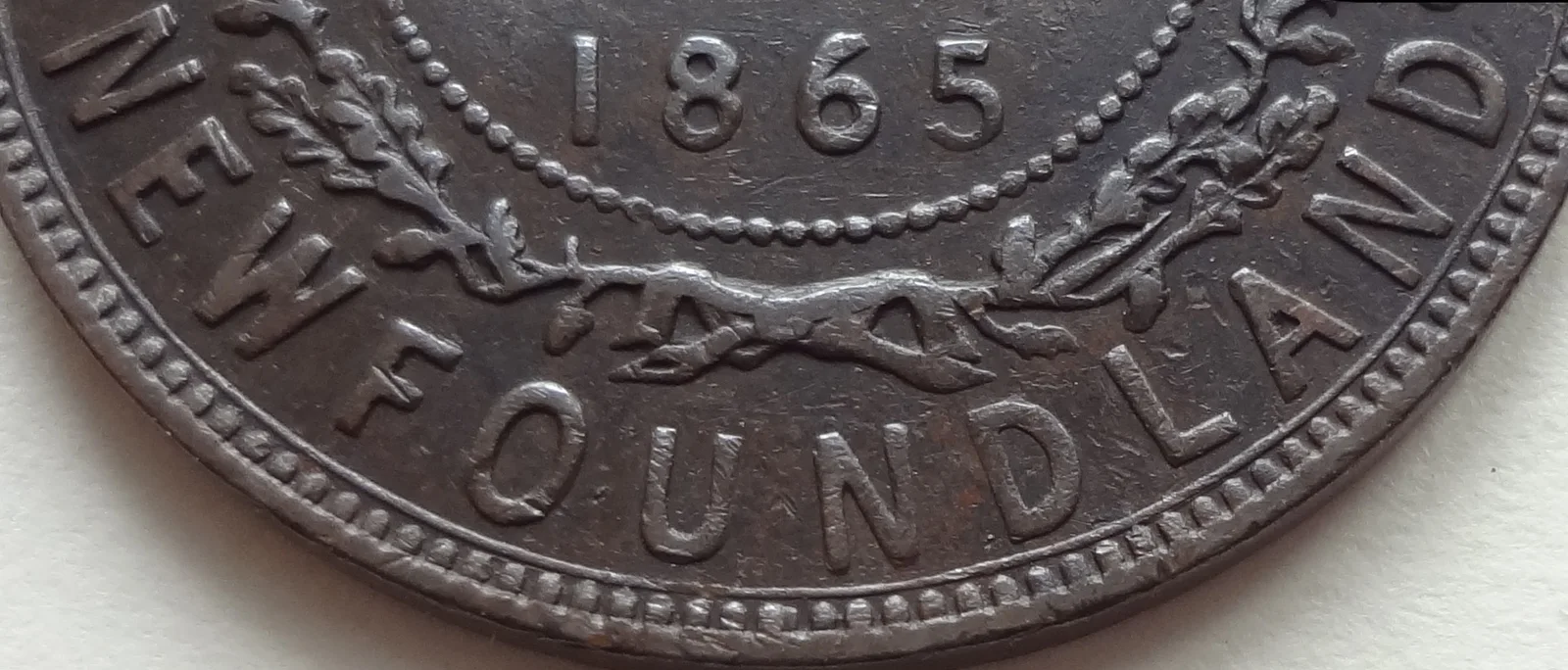
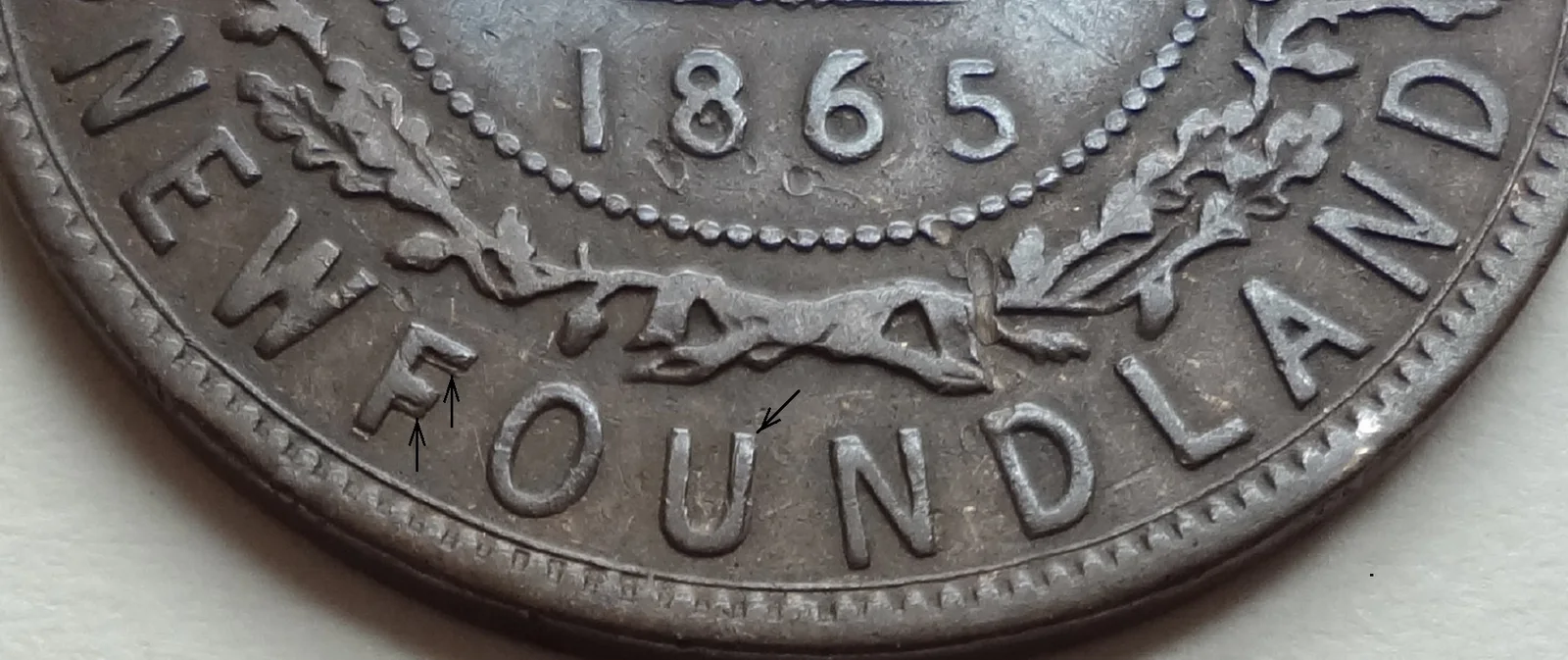
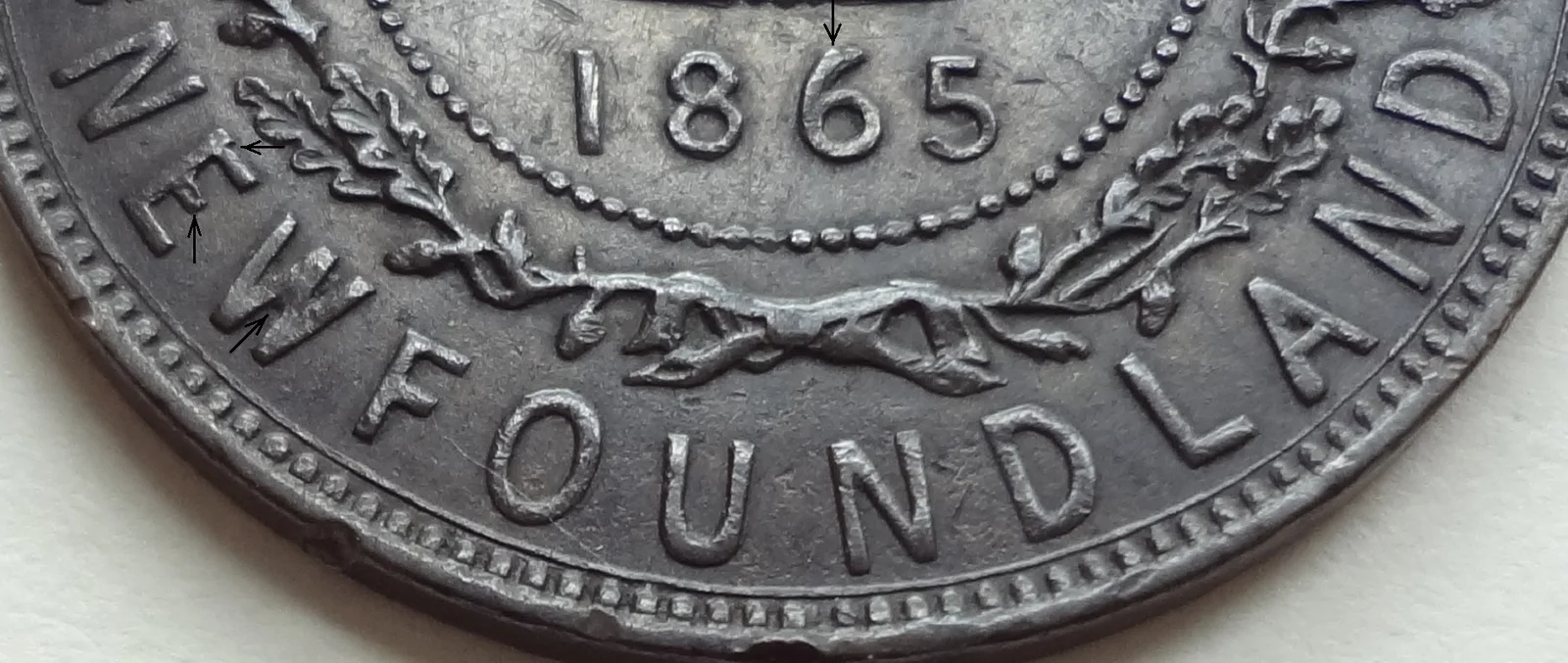
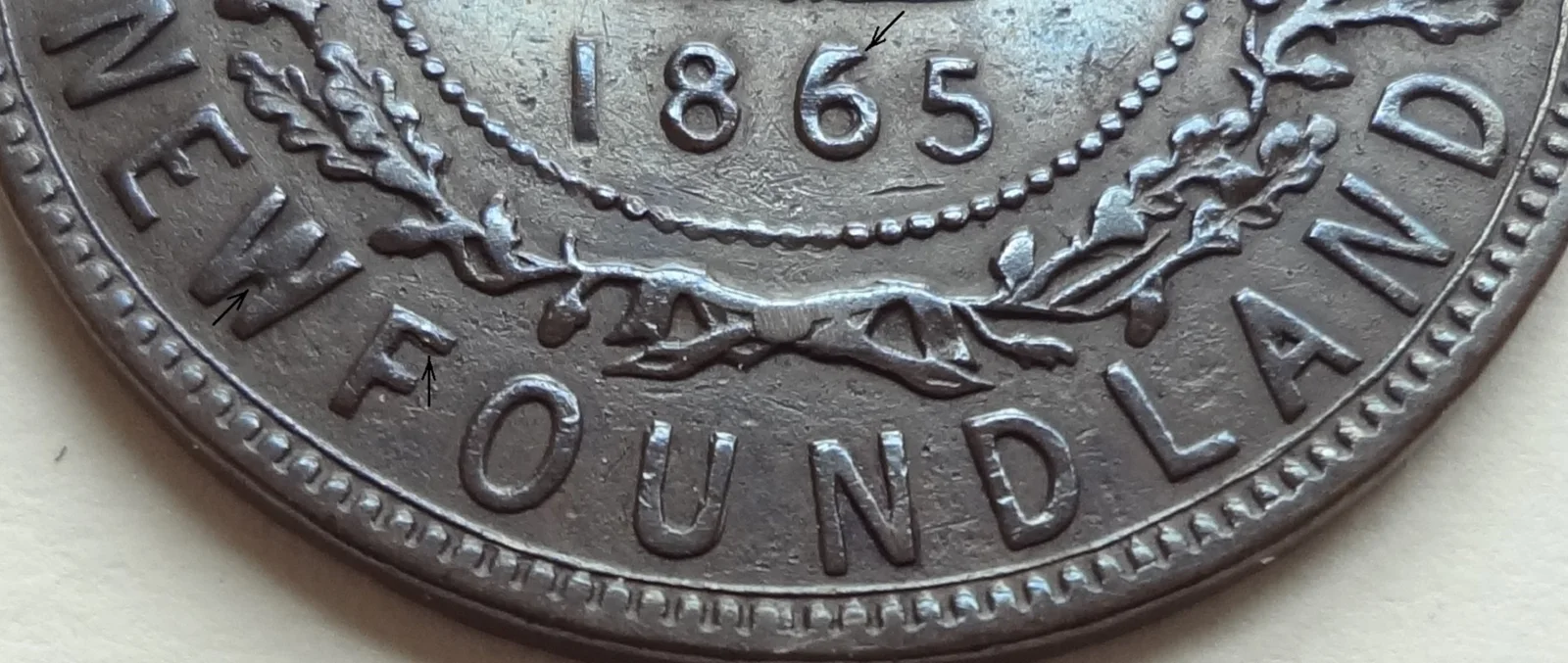
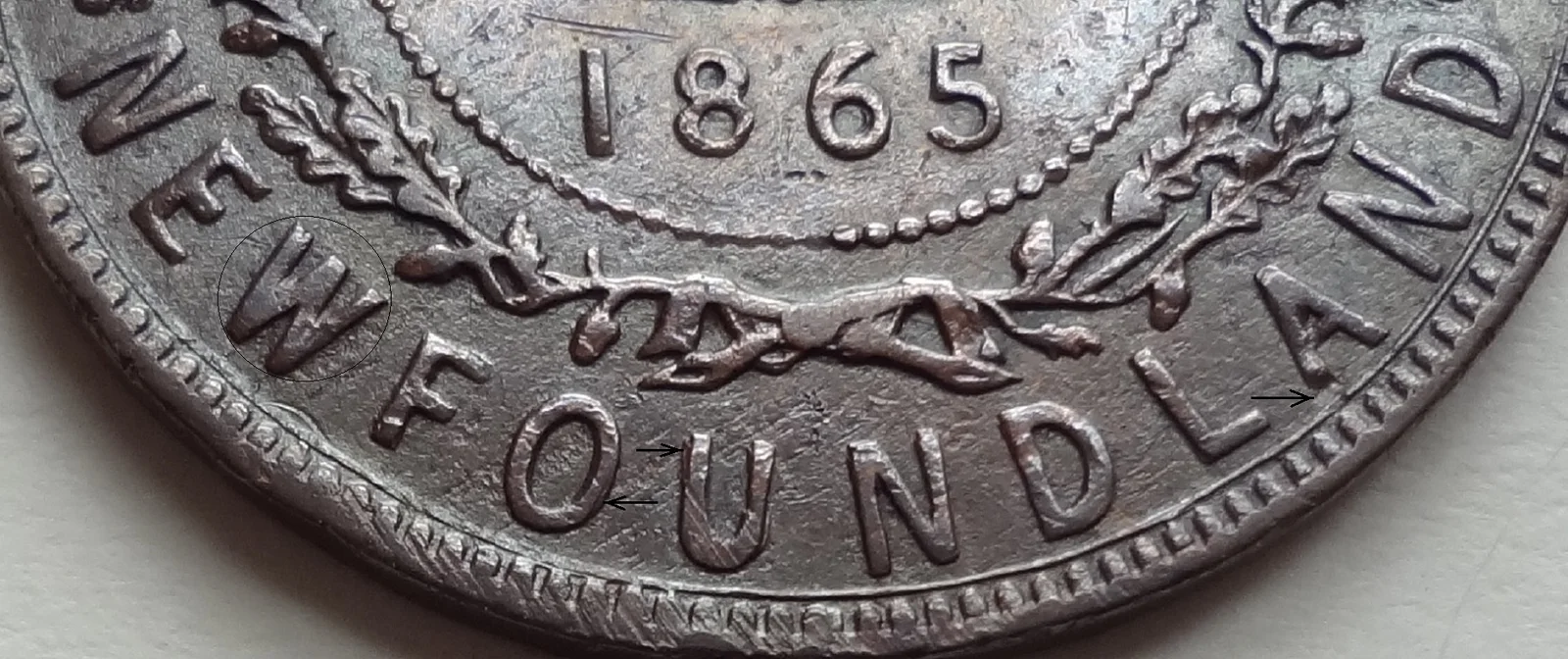
It appears that the officials at the British Royal Mint were not satisfied with the striking of the "6" in the date, and subsequently, went about correcting this problem by Re-punching this digit on all of the production dies. Currently, every example from this 1865 Large Cent series (which had been examined), has displayed some type of alteration to this numeral. However, at least three stylistically different characters were used during this process. Two of these have Flat-End tails, with one being Longer than the other, and a third example was found to have a Long, Flat-Top and Pointed Tail. All of these were often used for the modifications to these dies! As an aside, it may still be possible to find that some of these 1865 Large Cents might have been struck without this usual Re-punching of the "6". However, if this did occur, then they must be very rare indeed!
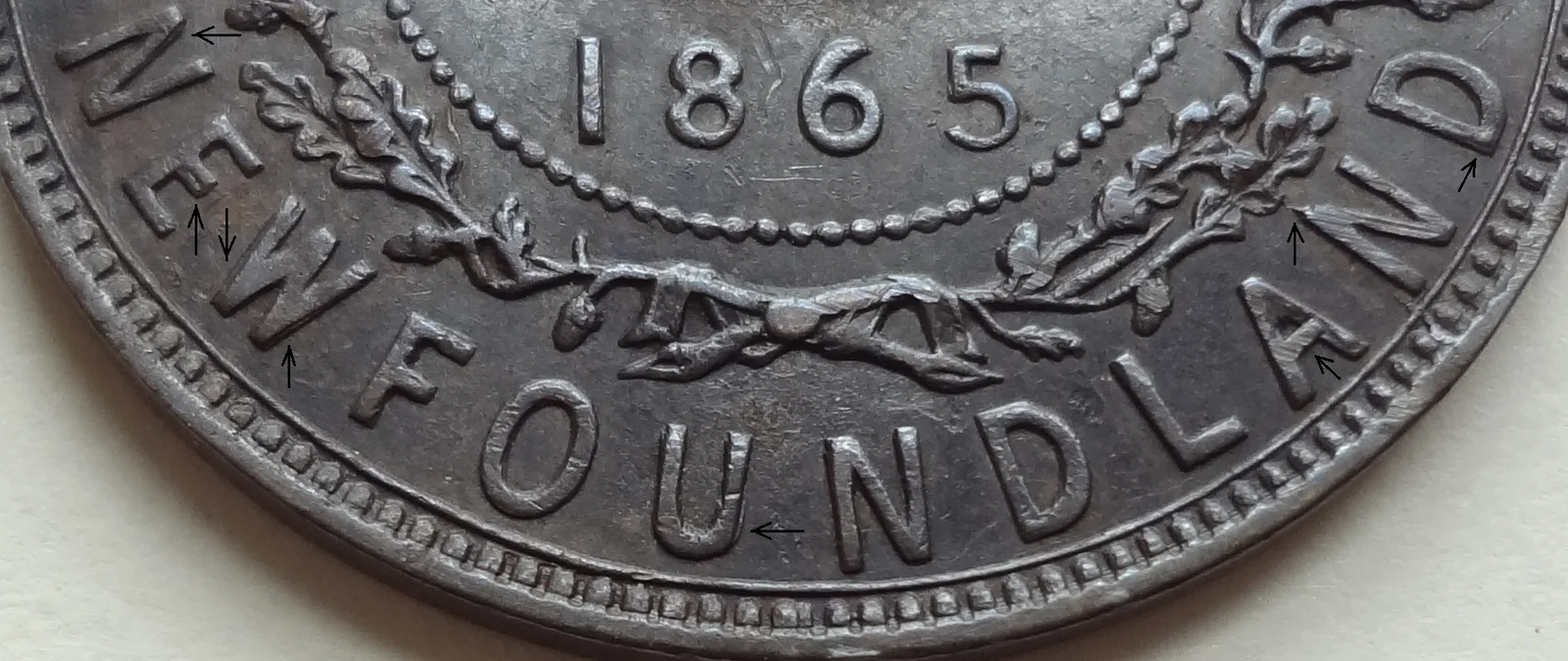
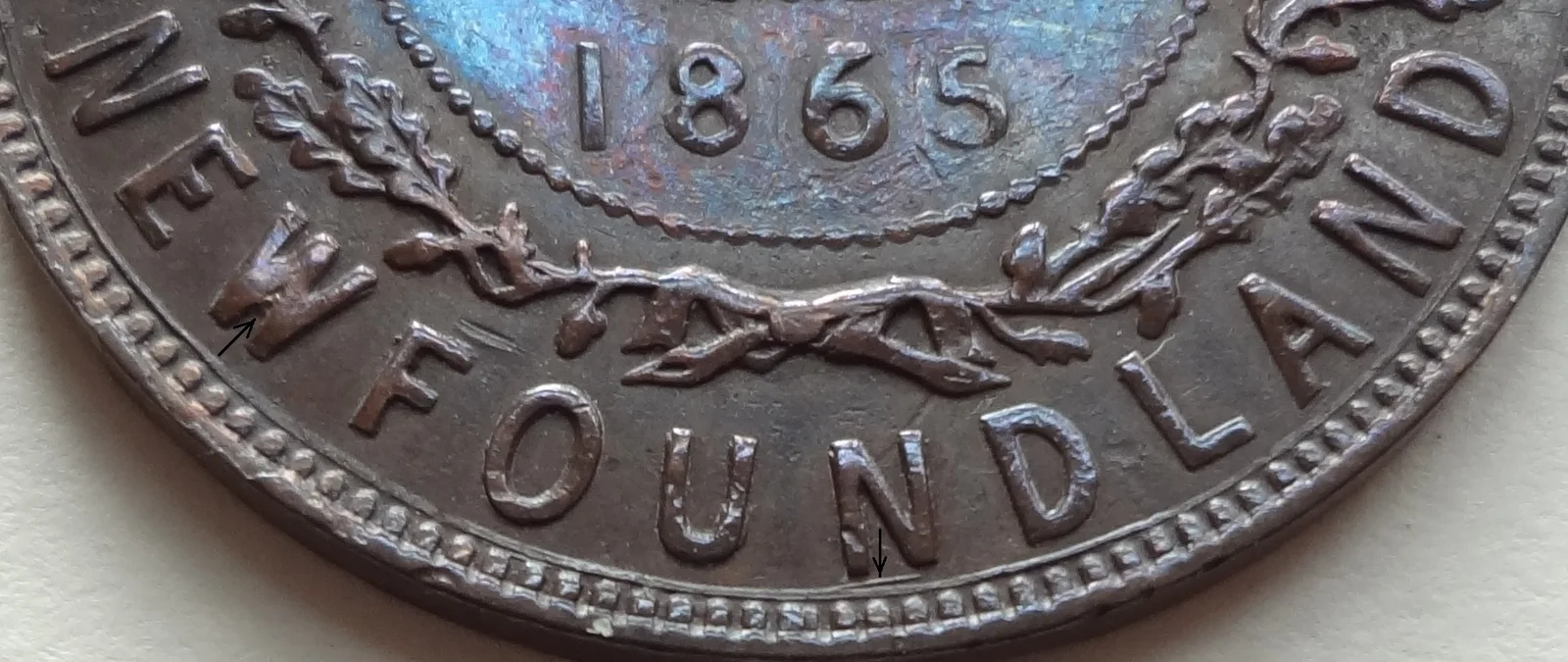
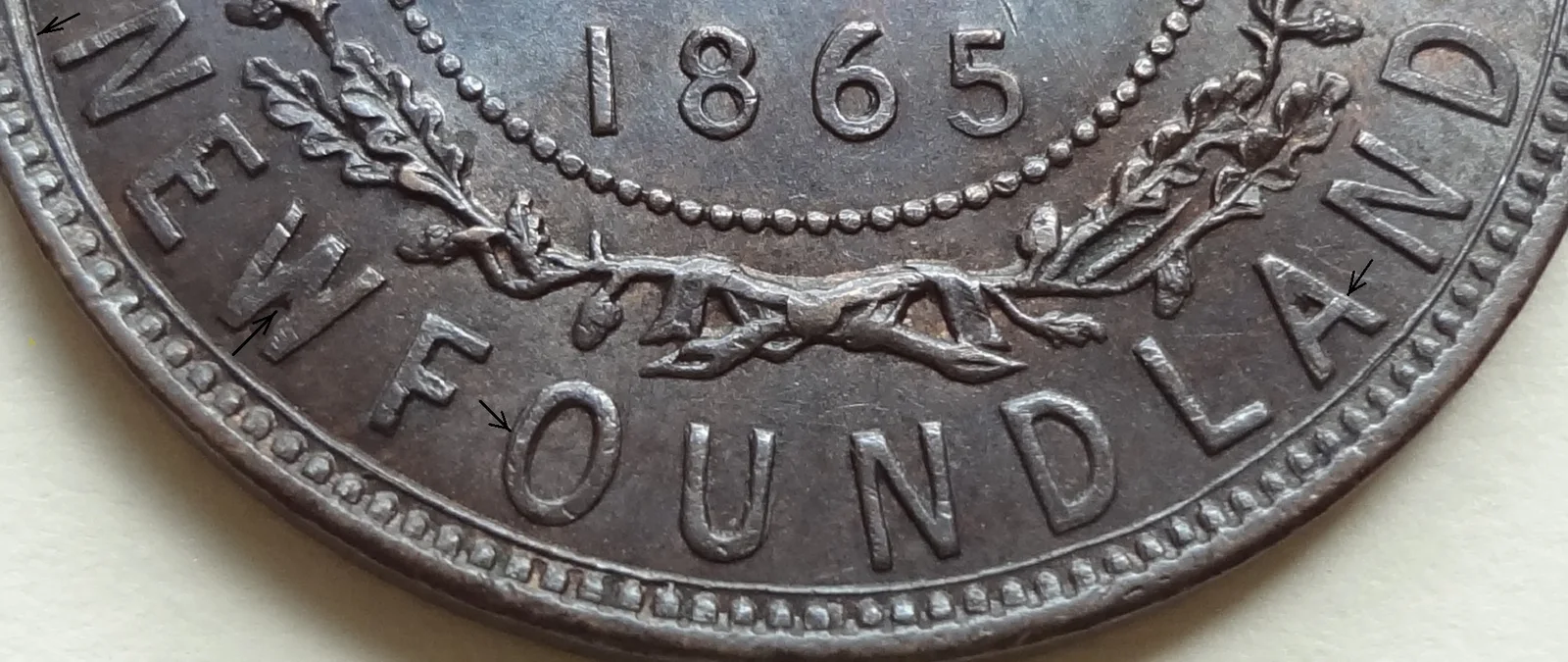
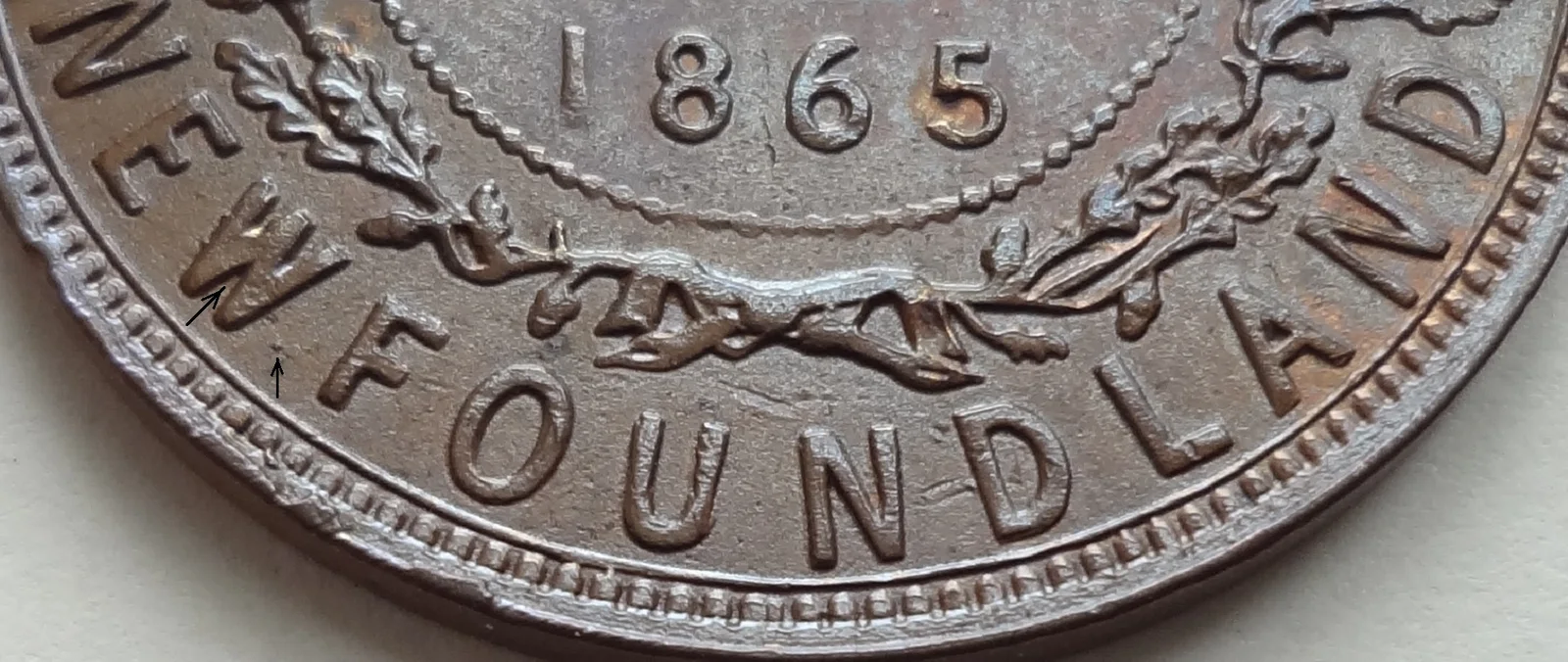
Finally, mention must also be made of the many Re-engraved Letters which have been found on the Reverse Side Legend. While most illustrate some traces of these alterations, only a few are interesting enough to be highlighted for this year. In addition, there were two stylistically different types of "W's" used in the word "NEWFOUNDLAND". The early recognition of the specific type of "W" used, will be most helpful with the identification of a particular variety. In fact, it would eliminate by half the number of varieties that would be needed for this research! Because of their unique appearances, they will be referred to as either, "Gothic" or "Romanesque", in the following descriptions.
The varieties
TYPE I
-
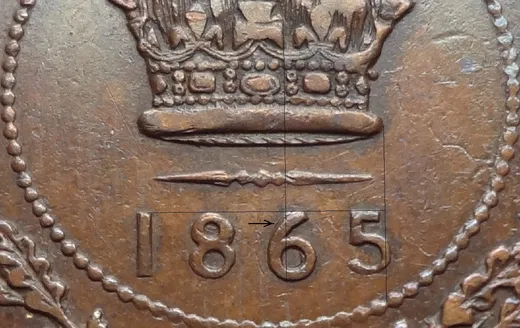 TYPE I (a) Wide Date, Tall "6" / Short "6", Even "5", Letters "N", "A" & "N", Close to Wire Border & Re-Engraved Gothic "W"
-
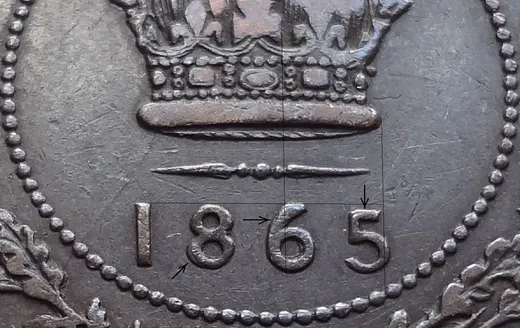 TYPE I (b) Wide Date, Re-punched “8”, Tall "6" / Short "6", Low "5" & Re-Engraved Gothic "W"
-
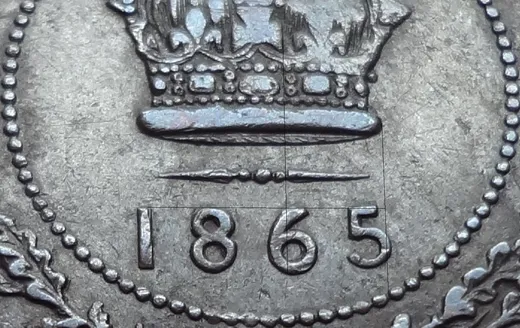 TYPE I (c) Wide Date, Multi-Punched "6", Even "5", Small, Diamond-Shaped Eyes in "8", & Romanesque "W"
-
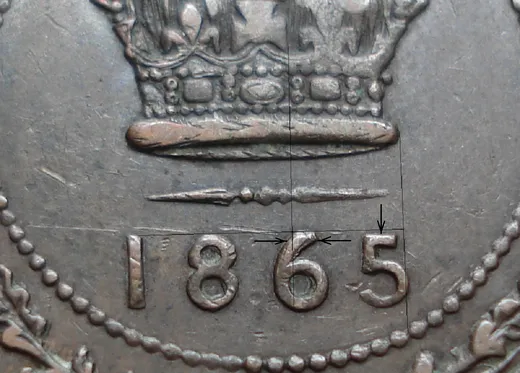 TYPE I (d) Wide Date, Short "6" / Tall "6", Low "5". Re-Engraved "O" & Romanesque "W"
-
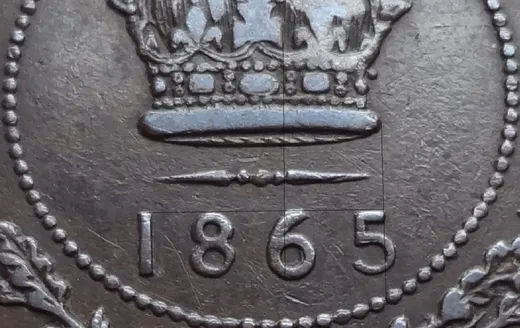 TYPE I (e) Recent Widest Date, Re-punched "6", Even "5", Modified Letters & Extensively Re-Engraved, Gothic "W"
-
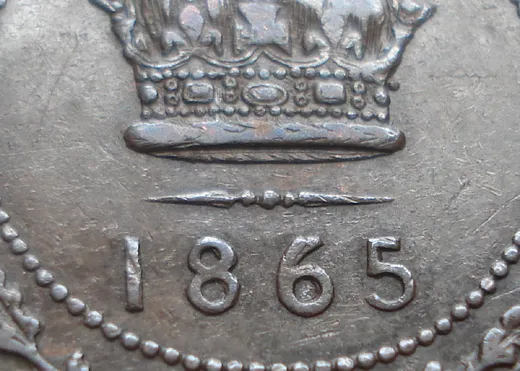 TYPE I (f) Recent Wide Date, Re-punched, Short "6" / Tall "6", Even "5", Wire Spur, Re-Engraved "O", Gothic "W" & Obverse "V" Over "A"
-
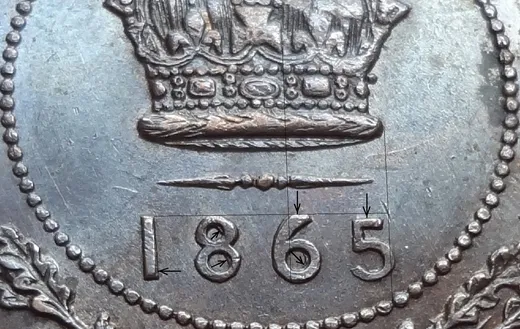 TYPE I (g) Recent Wide Date, Re-punched "6", Low "5", Notched "E", Fine Wire Spur, Obverse "Die Crack" & Romanesque "W"
-
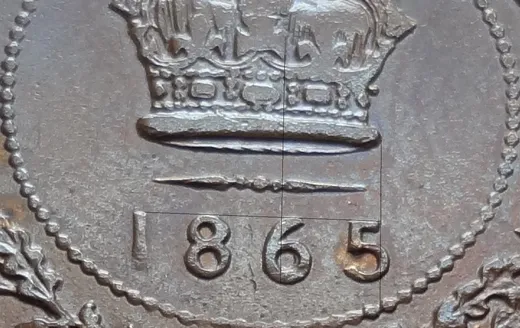 TYPE I (h) Recent (2nd) Widest Date, Re-Eng. “O”, Gothic “W” (Unmodified)
-
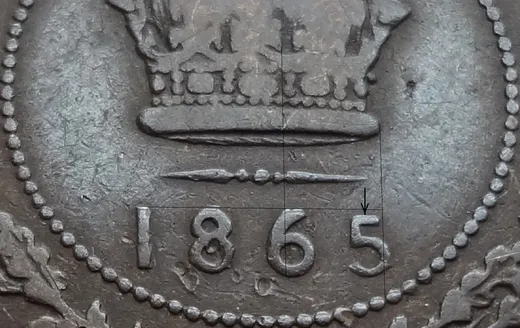 TYPE I (i) Recent Wide Date, Low “5”, Re-Eng. “F”, Romanesque “W”
TYPE II
-
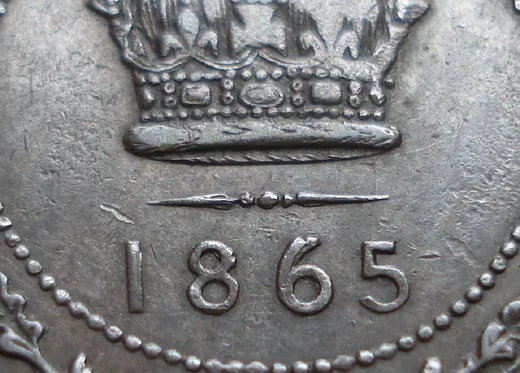 TYPE II (a) Narrow Date, Off-Centre, Short "6" Over Tall "6", Low "5", Notched "E" & Romanesque "W"
-
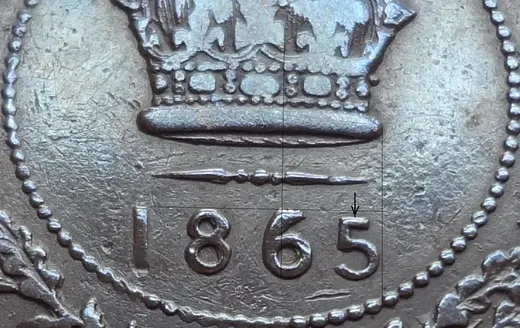 TYPE II (b) Narrow Date, Re-Engraved Obverse Lettering, Re-punched "8", Multi-Punched "6", Low "5", Romanesque "W" & Re-Engraved "F"
-
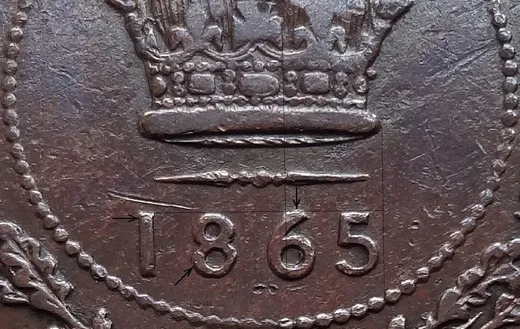 TYPE II (c) Recent Narrowest Date, Re-punched "6", Even "5", Malformed "A" & Gothic "W"
The Use of Stylistically Different "W's" for these Variations (Gothic vs Romanesque)
A curious observation can be made from the use of the "W's" (in "NEWFOUNDLAND) for each of these different variations. Under normal circumstances, it would be expected that this Letter would have been made from two symmetrical "V's", which would have given it an evenly balanced appearance. However, this is not the case for many of these varieties. In some instances, the "W" seems to have been constructed from a "V" on its Left side, whereas a Shallow "U" was used for the Right side, leaving it with an overall Asymmetrical appearance! In addition, the Symmetrical "W's" were all found to have been constructed over a Gothic Arch, and the Asymmetrical examples were supported by an Romanesque Arch [with the exception of the TYPE I (h)]. This particular feature, along with some of the coin's other characteristics will be very helpful with the identification of a specific variety. Finally, it should be noted that most of the Gothic style "W's" were found to be noticeably Altered, making them more identifiable! However, the TYPE I (h)* & TYPE II (c)** do not display any significant signs of Alterations to this Letter, and also, the TYPE I (h) has Asymmetrical “V’s” as an unusual and unique characteristic among these Gothic “W’s”!
| Gothic "W" Varieties | Romanesque "W" Varieties |
|---|---|
| TYPE I (a) (symmetrical) | TYPE I (c) (asymmetrical) |
| TYPE I (b) (symmetrical) | TYPE I (d) (asymmetrical) |
| TYPE I (e) (symmetrical) | TYPE I (g) (asymmetrical) |
| TYPE I (f) (symmetrical) | TYPE I (i) (asymmetrical) |
| TYPE I (h)* (symmetrical) | TYPE II (a) (asymmetrical) |
| TYPE II (c)** (asymmetrical) | TYPE II (b) (asymmetrical) |
Note: For any of the following photographs, a Letter enclosed by a Square Bracket [A], indicates that there is a corresponding photo of an enlargement for that Letter. These are considered (by this author) to be some of the more interesting and Important Re-engraved Characters for this particular date.
Side by side
Barry's comparison plates: the same detail on each variety, so the differences are easy to see.
Date Variations